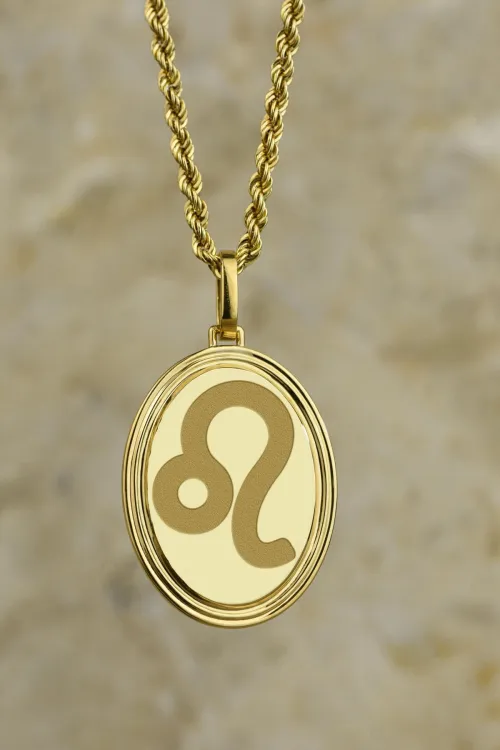
Picture this: You're selecting a birthday gift for a Leo friend when suddenly you hesitate – is it peridot or ruby that represents their fiery spirit? Perhaps you've inherited an August birthstone jewelry piece but can't decipher those mysterious bands of color. Leo birthstones hold layers of meaning beyond their sparkling surfaces, bridging ancient warrior traditions and modern gemology. This exploration walks through five key dimensions: from definitive identification to scientific properties, symbolic connections, authentication techniques, and unexpected historical journeys. We'll decode how these stones formed deep within Earth's furnace or distant meteorites, why their physical traits impact daily wear, and practical ways to distinguish natural gems from synthetics when you're evaluating pieces.
When verifying August birthstones for gift documentation, jewelry appraisal, or personal knowledge, confusion often arises between modern and traditional designations. The magnesium iron silicate we call peridot stands as today's primary Leo gem, historically termed "gem of the sun" for its luminous olive-green hue. Sardonyx – distinguished by its cinnamon and cream banding – remains the classical alternative rooted in Roman traditions.
Clarity in identification begins with location context: while most commercial peridot originates from Arizona or Pakistan deposits, Sardonyx sources trace back to Indian and German quarries where groundwater deposited mineral layers over epochs. Market observation reveals consistent patterns - 80-90% of Leo birthstone jewelry features peridot solitaires, whereas cameos and signet rings typically incorporate sardonyx. Geological verification often depends on examining stone formation: authentic peridot appears exclusively in volcanic basalt or pallasite meteorites, unlike its quartz-based alternatives.
Gemologists recognize these Leo stones through measurable physical properties that directly impact wearability and value assessment. Peridot's 6.5-7 Mohs hardness positions it mid-scale, more resistant than opal yet softer than sapphire – a factor explaining its vulnerability to scratches without protective bezel settings. Its defining double refraction creates blurred facet edges under 10x magnification, a signature physical trait.
Sardonyx presents structurally as banded chalcedony, its parallel striations forming through cyclical silica deposition in rock cavities. Visual analysis typically focuses on three attributes: band sharpness (distinct lines suggest natural formation), layer count (multiple strata indicate slower development), and color permanence. When examining potential purchases, these signals frequently surface:
Leos typically gravitate toward stones mirroring their cardinal traits: leadership warmth, creative expression, and protective loyalty. Historical archives reveal Egyptian high priests used peridot in solar rituals, believing its luminosity harnessed Ra's power – resonating with Leo's planetary ruler, the Sun. Roman military records indicate commanders embedded sardonyx in armor, valued for perceived courage-enhancing properties during battles.
Contemporary jewelry designers frequently observe Leos selecting stones aligning with specific life chapters: recent graduates might choose lively peridot pendants representing new beginnings, while established professionals often prefer carved sardonyx signets projecting authority. The tactile experience matters too – peridot's vitreous luminosity encourages touch interaction, while sardonyx cameos connect wearers to ancestral crafts through their carved textures.

The dual-stone tradition traces to antiquity's split perspectives: Mediterranean cultures like Rome associated sardonyx with military gods, believing its layers symbolized strategic thinking, while Arabian scholars documented peridot's volcanic origin story centuries before modern geology. This parallel evolution converged only in 1912 when Jewelers of America formalized modern birthstone standards.
Tracing museum collections reveals telling transitions: Byzantine sardonyx seals gave way to Victorian mourning cameos, eventually declining as Art Deco embraced peridot's geometric brilliance. Twentieth-century mining advancements then shifted accessibility – discovery of Arizona's peridot-rich San Carlos Apache lands democratized Leo's gemstone availability around the 1960s. Simultaneously, archaeological excavations near Germany's Idar-Oberstein region revived ancient sardonyx carving techniques nearly lost to industrialization.
Market analysis suggests 30-40% of supposed "natural" birthstones undergo treatments – making authentication skills valuable for collectors. Beyond standard gem tools, everyday observation techniques often reveal authenticity markers:
Rotate sardonyx under focused light; reconstructed stones display interrupted striations where layers meet the edge. Natural specimens maintain unbroken parallel lines that seem to extend beneath the surface. Pay particular attention to depth perception – authentic banding appears three-dimensional when viewed obliquely.
Observe light movement across peridot pavilion facets during slow wrist rotation – plastic simulants create rainbow flashes where genuine stones exhibit consistent brilliance. Authentic peridot may also reveal doubling of facet junctions under magnification, a direct consequence of its birefringence properties impossible to replicate in cubic zirconia or glass.
Choosing between Leo birthstones ultimately combines personal resonance with geological practicality – think about how the stone fits into your daily narrative. Consider medium-green peridot with balanced saturation for lasting value over yellowish alternatives, particularly in protective bezel settings if worn frequently. For sardonyx, prioritize specimens with defined band contrast visible without magnification, where intricate cameo work honors Victorian carving traditions.
Seasoned collectors often apply these experiential principles: Match the stone to your energy rhythm – vibrant peridot for active lifestyles, grounding sardonyx for contemplative moments. When acquiring pieces, request gemological certificates to identify common treatments. Select cushion cut designs to maximize peridot's brilliance. Remember, well-chosen birthstones become personal symbols rather than mere adornments, marking chapters of growth. The next time you hold one, look beyond the sparkle – consider its journey through millennia to reach your hands.
Q: Could citrine or ruby be alternatives?
A: While historical overlap exists in some traditions, modern standards consistently list peridot and sardonyx as Leo's primary stones. Ruby belonged to earlier astrological systems with different correspondences, though its fiery color aligns with Leo symbolism.
Q: Why does my peridot appear less green over time?
A: Noticeable color fading can point towards heat-treated specimens or glass imitations. Natural peridot generally maintains stable coloration unless exposed to harsh conditions that might affect clarity.
Q: Where do top-quality specimens originate today?
A: Optimal peridot often comes from Pakistan's Himalayas where elevation preserves crystalline integrity. Sardonyx featuring precise banding is frequently sourced from Brazil or German deposits known for mineral purity. Always verify provenance documentation when evaluating a piece.
Q: Any pronunciation guidance?
A: Sardonyx is typically pronounced "sar-DON-iks" with emphasis on the second syllable, while peridot is "PAIR-uh-dot" in gemological contexts.


$
